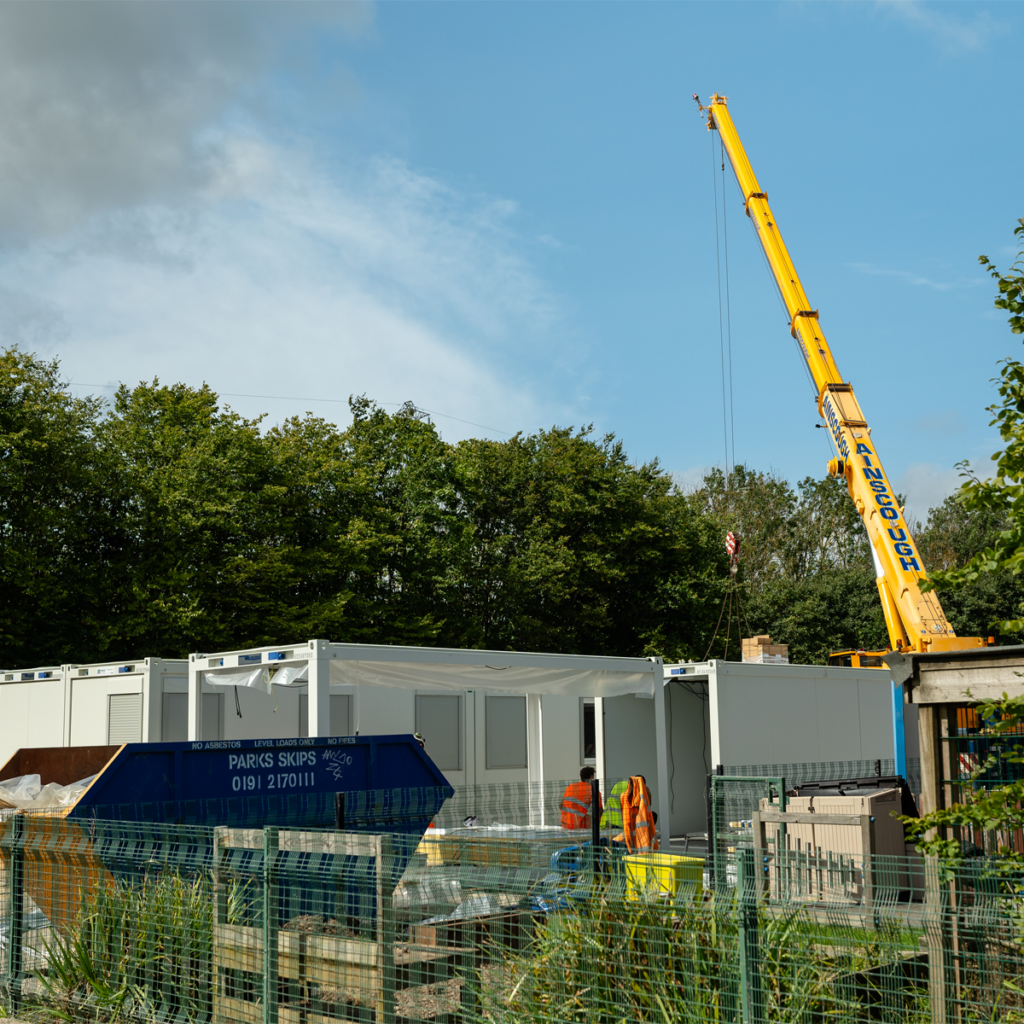
You hear ‘modular buildings’ and may instantly picture a permanent investment. Something that, when bought, needs commitment for the long haul. It’s a common assumption, and the idea of hiring doesn’t usually jump to the front of anyone’s mind.
However, what someone may not realise is that you can hire modular units, and in many cases, it might actually make life a whole lot easier and faster. So, instead of wrestling with huge upfront costs or being unsure how long a building will be needed for, hiring lets you bring high-quality space without that long-term weight on your shoulders.
And for projects that don’t need something permanent, hiring just opens the door. It makes the process feel lighter, more flexible, and easier to get moving.
Flexible Costs and Space Without the Long-Term Commitment
One of the biggest advantages of hiring modular buildings is how much easier it makes budgeting. Instead of dealing with a large upfront payment, predictable monthly costs can keep everything feeling controlled and manageable. Therefore, it’s a far simpler way to bring in the space you need without committing large amounts of money from day one.
Hiring also works perfectly well for projects where the timeline isn’t set in stone. Sometimes a project is only running for a short stretch, sometimes things shift halfway through, and other times you’re simply not sure how long the extra space will be needed. Hiring makes all of that easier to manage. You can keep the unit for exactly as long as the work demands, and we can take it back as soon as you’re finished. And if the timeline changes, extending the hire is straightforward, so you’re never left holding on to a permanent building that no longer suits the job.
It’s also worth factoring in the speed. Hired units can be delivered and set up quickly, often with barely any impact on what is currently happening on-site. Even though the unit is hired, you’re still getting the same high-quality and properly engineered buildings you’d receive if you bought them outright.
The difference? Freedom. There’s no long-term commitment, but instead, just the space you need, exactly when you need it.
Where Hiring Fits Best Across Different Industries
Hiring makes even more sense when you consider the projects that rely on space quickly and for reasons that aren’t always permanent.
Construction teams, for example, often need welfare facilities or site offices temporarily, and hiring units gives them the freedom to scale up or down as the project progresses.
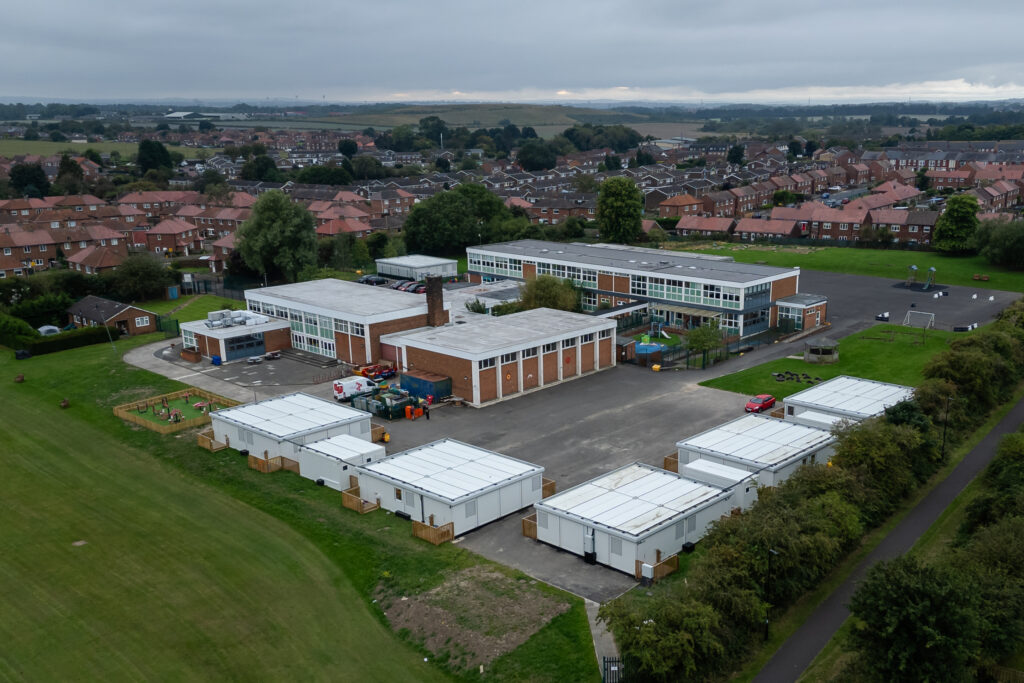
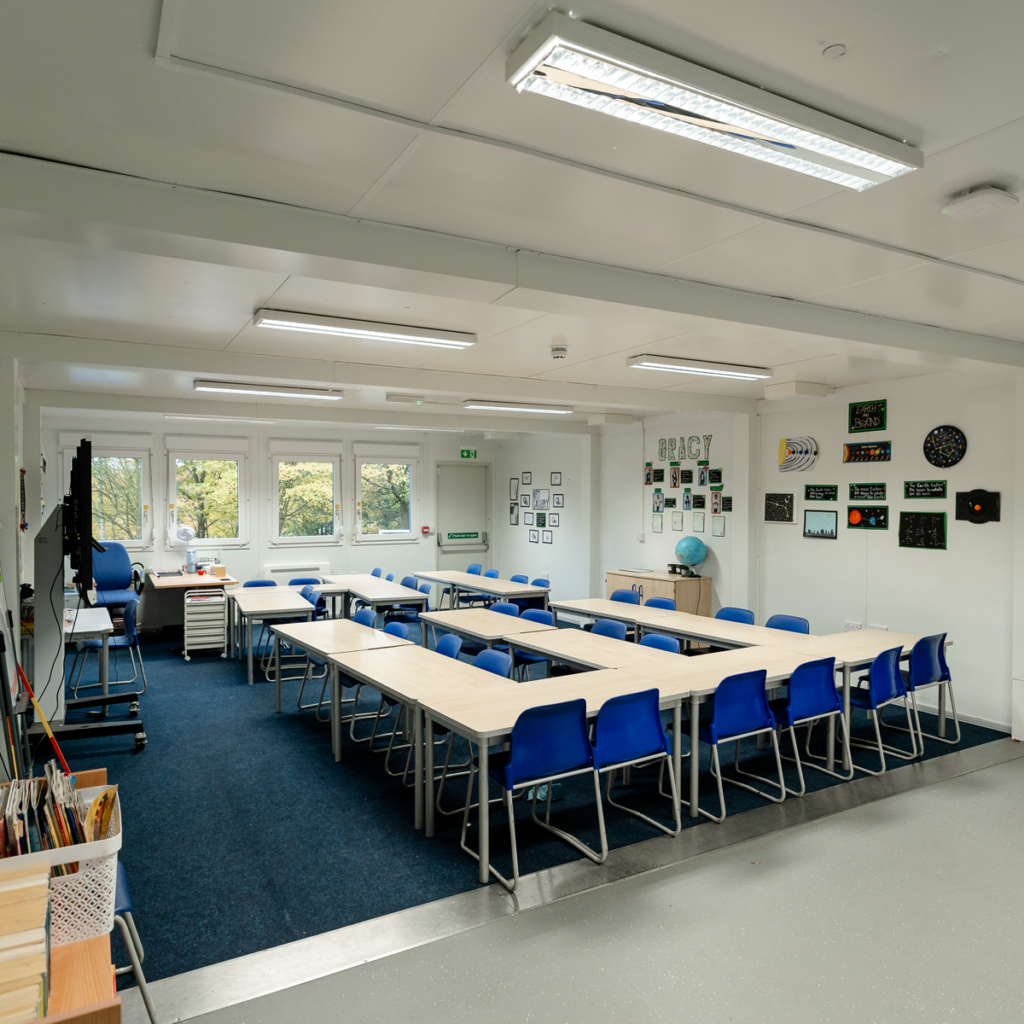
In the education sector, schools can potentially face the same challenge when urgent extra temporary space is needed. Bringing in temporary learning spaces and offices through hire keeps everything running smoothly without committing to buildings that may not be needed long term. This was seen clearly in our work with North Tyneside Council and Fordley Primary School. When sudden structural issues forced several of their buildings to close, the council needed a safe, functional teaching space fast. Maxi Space stepped in with a full temporary school setup that kept lessons going on-site while repairs were carried out. It’s a great example of how hired modular classrooms can bridge the gap when education environments face unexpected disruption. (Read the full case study here.)
Healthcare providers can deal with pressures of seasonal peaks, renovation work, or unexpected situations that create sudden space shortages. Hired units allow them to adapt without slowing down essential services.
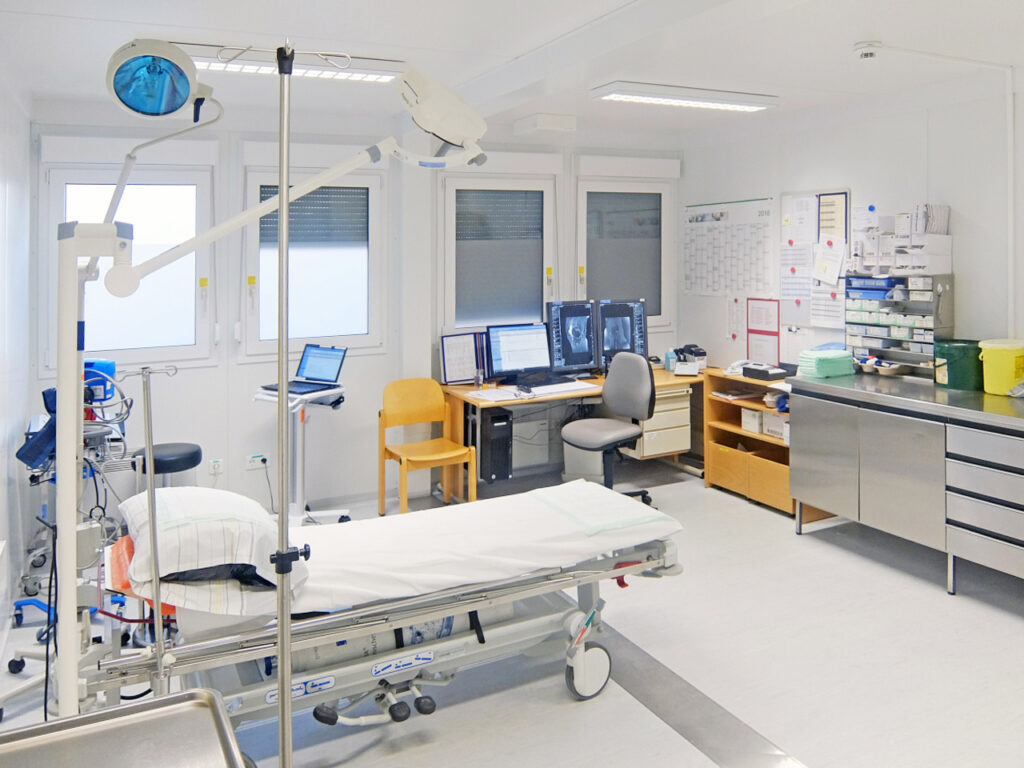
In emergency settings, the speed becomes even more vital. Disaster relief teams need buildings they can use immediately, whether for medical stations, welfare areas, or command points. Hiring gives them that rapid response without being tied to permanent structures.
Remote and high-pressure environments like oil and gas sites also benefit from hiring. When operations move, expand, or face tough, remote conditions, having temporary, durable accommodation or workspace is essential.
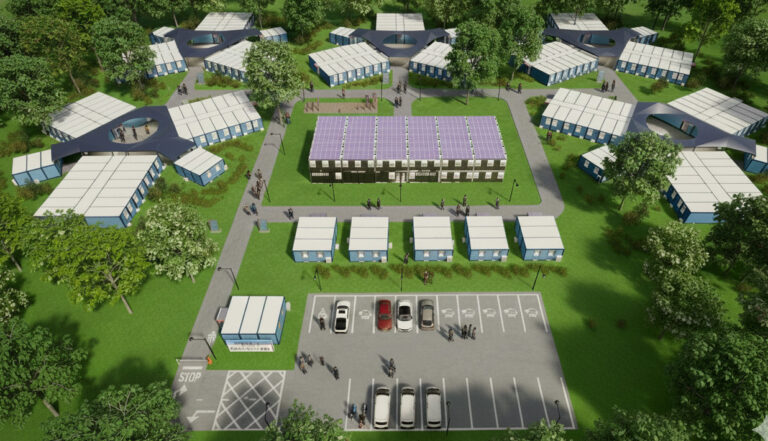
The same goes for defence teams who need relocatable training rooms, secure facilities, or command spaces they can trust in demanding environments. Maxi Space has taken this a step further with the development of Eastleigh Village, a modular accommodation concept shaped by years of delivering rapid‑deployment and long‑term defence infrastructure around the world. Designed to house more than 400 personnel, it creates a safe, self‑contained village environment with space to live, train, relax, and work. It’s a flexible option for defence organisations that need compliant, high‑quality accommodation delivered at speed. (Learn more about Eastleigh Village here.)
And as data centres continue to expand at speed, bringing in temporary workspace or extra technical capacity through hire helps keep everything running on-site without slowing the operation.
No matter which industry you look at, the same thing tends to happen. Plans move around, requirements shift, and hiring gives people the freedom to adjust without overthinking it. It keeps everything simple and flexible, which is exactly what you need when a permanent building just isn’t the right call.
Conclusion
Hiring modular buildings gives you options, and that flexibility is often the biggest advantage of all. It removes the pressure of high upfront costs and takes a lot of the risk out of decisions that don’t need to be permanent. Instead of defaulting to buying and hoping it still makes sense years down the line, hiring lets you respond to what’s actually happening right now.
For many projects, that freedom matters more than ownership. You get the space you need, when you need it, without overcommitting or tying yourself to something that may only serve a purpose for a short time. And in a world where plans change quickly, that kind of flexibility can make all the difference.