Short-Term or Long-Term Use: How Modular Buildings Adapt
The way organisations utilise space is evolving. What was once a fixed, long-term decision is now much more adaptable, influenced by changing needs, unforeseen events, and the requirement to respond swiftly without sacrificing quality.
Modular buildings are often associated with speed and flexibility, but their real strength lies in how well they adapt to both short-term and long-term needs. Understanding these two approaches will help you choose a solution that works not just today, but as circumstances change.
Short-Term Modular Use
Short-term modular buildings are created to address urgent or temporary needs promptly. They are used when existing facilities become unavailable or when organisations need to act quickly to maintain continuity.
Responding to Unexpected Challenges
One of the most common short-term uses for modular buildings is emergency response. Schools, for instance, may need immediate classroom replacement following fire damage, structural issues, or even refurbishment. In such cases, speed is crucial to minimise disruption for pupils and staff.
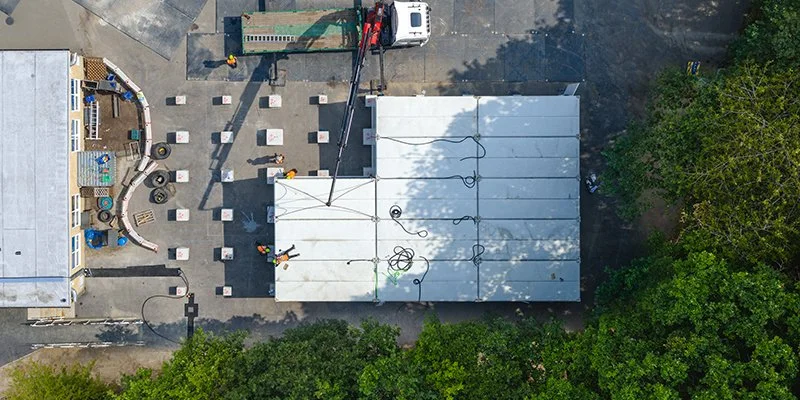
Modular buildings at Maxi Space are constructed off-site and installed rapidly, offering fully functional, clean spaces that enable normal operations to continue while permanent repairs or longer-term plans are arranged.
Flexible Support During Change
Short-term modular buildings are also valuable during periods of transition. This can include decant accommodation during refurbishment projects, temporary expansions to accommodate increased demand, or interim space while future requirements are still being assessed.
Cost-Controlled and Adaptable
For short-term needs, modular buildings offer a cost-effective solution that avoids the complexity and disruption of traditional construction. They allow organisations to meet immediate requirements while retaining flexibility for future developments.
Long-Term Modular Use
While modular builds are often linked to short-term use, they are equally effective as long-term solutions. Designed for durability and daily use, long-term modular buildings offer the performance of traditional structures with added flexibility.
Adaptable by Design
An ability to adapt is where modular buildings really thrive in the long term. As organisations grow or change, modular spaces can be:
· Extended with additional modules
· Reconfigured internally
· Repurposed for different uses
· Adapted in phases without major disruption
This makes long-term modular buildings ideal for when you can expect future change.
Modular buildings provide certainty without sacrificing flexibility, allowing spaces to evolve as needs change rather than becoming restrictive over time.
Choosing the Right Approach
The ultimate decision between short-term and long-term modular use comes down to certainty.
Short-term modular buildings are best suited to urgent, transitional, or uncertain scenarios where flexibility is essential. On the other hand, long-term modular buildings work best where organisations need durable, adaptable spaces that can support growth over time.