
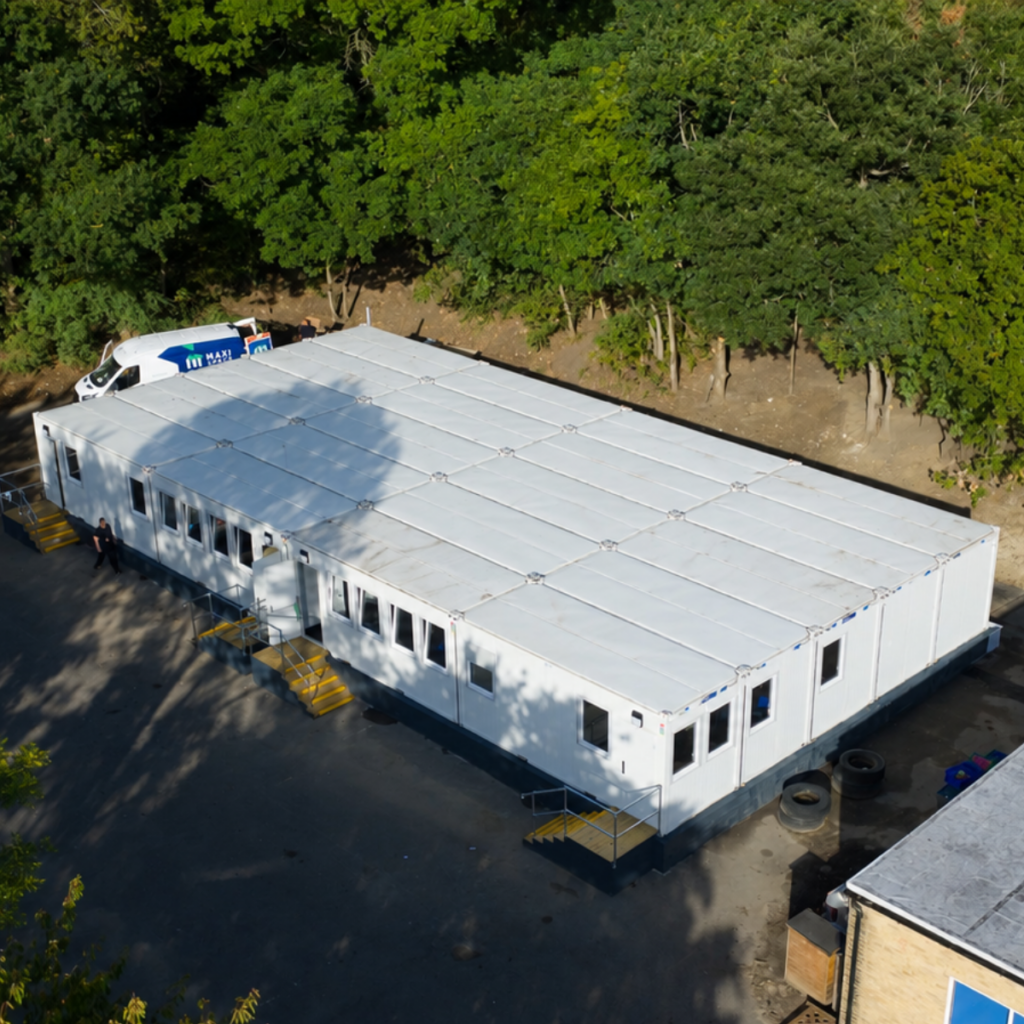
Every school building project must work alongside a carefully planned timetable, because key deadlines and completion dates must be met to minimise any potential disruption to the school day. Modular construction is best suited for this, as the majority of the works takes place in a factory-controlled environment instead of at the school. The work that remains on site can be planned around the hours or weeks when students aren’t at the school.
Planning a modular classroom installation therefore becomes a question of sequence, deciding what can be done on site, and what can be done elsewhere.
Modular Construction Starts with the Handover Date
Midfield Primary School needed four temporary classrooms while extension and remodelling works took place in the main building. The units had to be handed over before the end of August 2025, so that pupils could use them from the start of the September term. Detailed design and building control approval were progressed in June, and on-site construction ran from 21 July to 22 August.
As the date was fixed, every stage of the project was timed to meet it, and this is where modular construction makes this possible, as the factory and site work can be done in parallel.
We use the RIBA Plan of Work to keep every stage of the process in order.
Moving the Work Away from the School
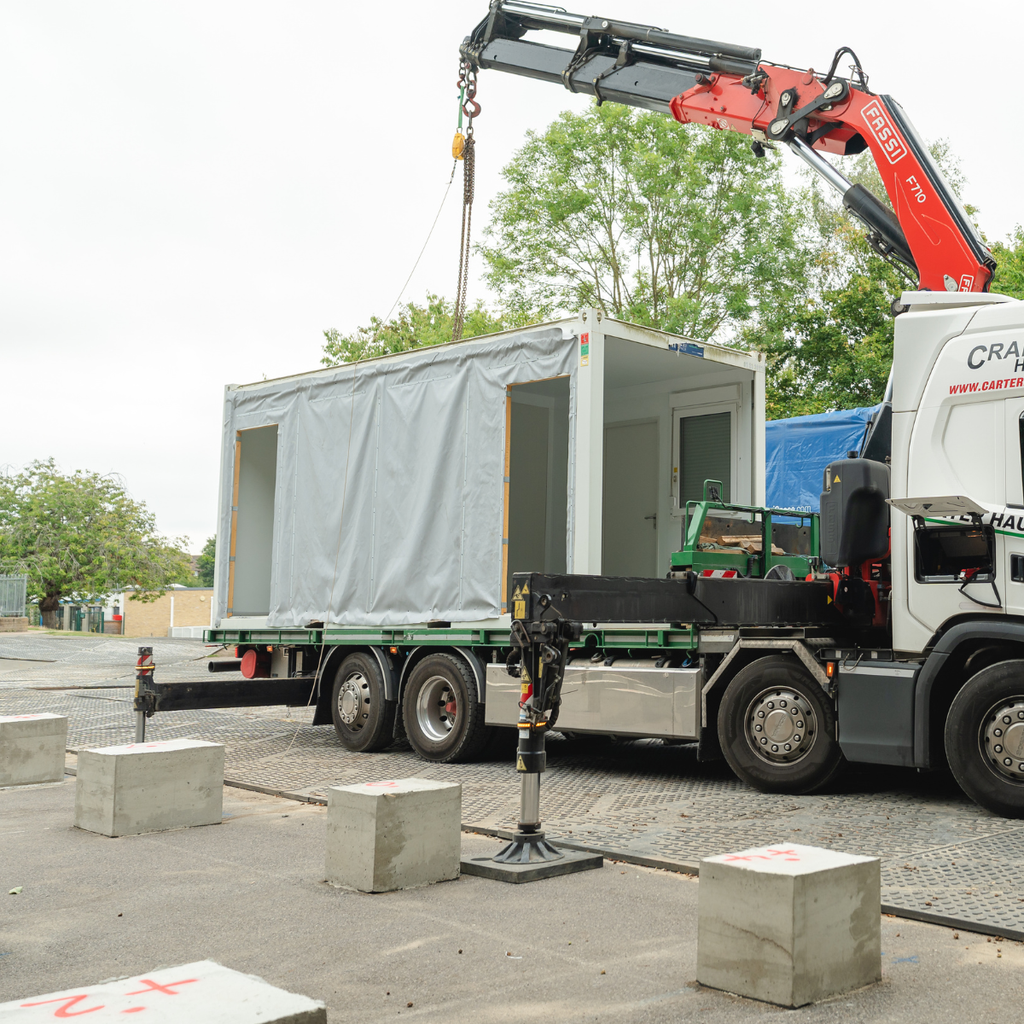
The advantage lies in what happens concurrently. Modular construction enables the units to be manufactured in factory-controlled environments while the groundworks can also be prepared on site.
This overlap is rapid deployment in practice, and it shortens the period for which the site itself is needed. Internal finishes can be installed in the factory, so each modular classroom arrives largely finished, and the remaining work on site is massively limited. That significantly smaller amount of work can then be scheduled for the times when pupils are not in the building, causing the least amount of disruption to students.
Building the New School Off Site
At a larger scale, the same principle can be applied. Where a school’s buildings have structural problems, replacement accommodation can be manufactured off-site and installed on the school grounds, so pupils can still learn there. At Churchill Community College, a 200-pupil modular school replaced affected buildings, and learning on site continued.
At Hazlewood Primary in North Tyneside, temporary buildings maintained education while repairs were carried out. In each case, modular construction gave the school somewhere safe to teach once its original buildings could no longer be used.
Keeping the Calendar in Conversation
The school’s calendar should be part of the discussion from the first conversation, since it determines what must be completed and when. If you are planning a modular construction project around your school year, visit us at Education Estates 2026 in Manchester Central, stand 641, October 20-21. Alternatively, contact the team to discuss your next project and explore the options available for your school’s specific requirements and timetable.