What should businesses expect from their office space today?
Today’s organisations are looking for environments that can adapt alongside them while creating a comfortable and productive experience for their teams.
Therefore, flexible office space has become more important, as instead of committing to environments that cannot expand or be reconfigured, the smarter solution is one that can evolve as requirements change. Through modern modular construction, office environments can be delivered quickly and designed around the needs of the people using them.
Why Flexible Office Space Matters in Today’s Workplace
In today’s business environment, workplaces rarely remain unchanged for years at a time. Office spaces need to adapt alongside organisational growth, supporting both existing requirements and future ambitions.
This is reflected in wider workplace trends, with research finding that 72% of businesses plan to increase their workspace within the next two years, while 59% intend to do so through flexible or coworking environments. These figures demonstrate the growing demand for adaptable office space that can respond to changing business requirements.
This highlights why flexible office space has become such an important consideration. Having the ability to adjust layouts, add new facilities or create additional working areas allows businesses to respond to change without the disruption that can be found in traditional office environments.
Office spaces can also improve organisation throughout the working day when designed properly. This is because creating a clear separation between work areas and supporting facilities helps them navigate the workspace naturally, allowing operations to run more efficiently. In fact, workplace research has shown that employees believe they would be 19% more productive in a better-designed working environment, reinforcing the impact that thoughtful office design can have on daily performance.
How Modular Buildings Support Changing Business Needs
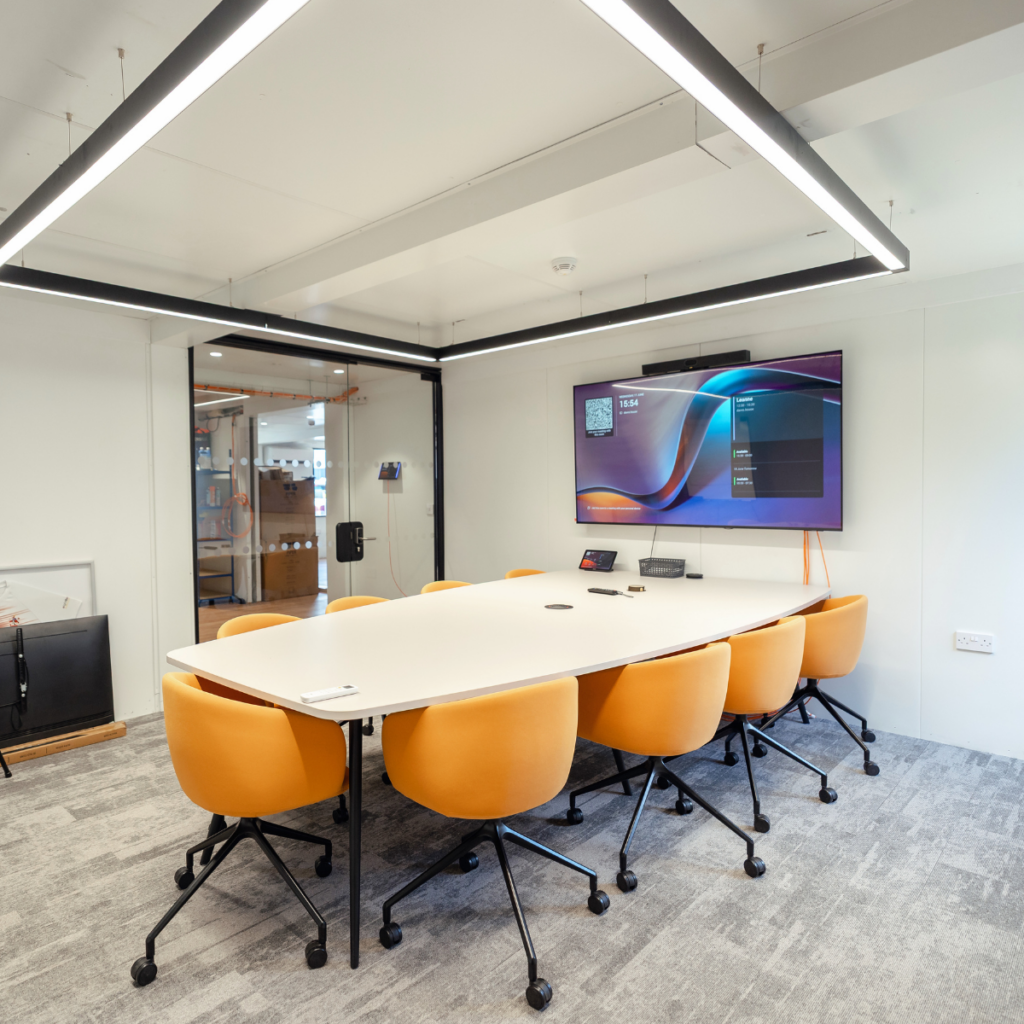
A huge advantage of modular buildings is the ability to adapt. Unlike traditional building methods, modular is designed with future requirements in mind, allowing businesses to make adjustments as their operations evolve.
Also, our modular office buildings are manufactured in a factory-controlled environment before being delivered and installed quickly on site, giving organisations access to a fully functional workspace without lengthy construction programmes.
Instead of being tied to a fixed layout, businesses can reshape their office space as new challenges and opportunities arise. Modular buildings provide the flexibility to adapt without unnecessary disruption.
Designing Office Spaces That Work for Your Business
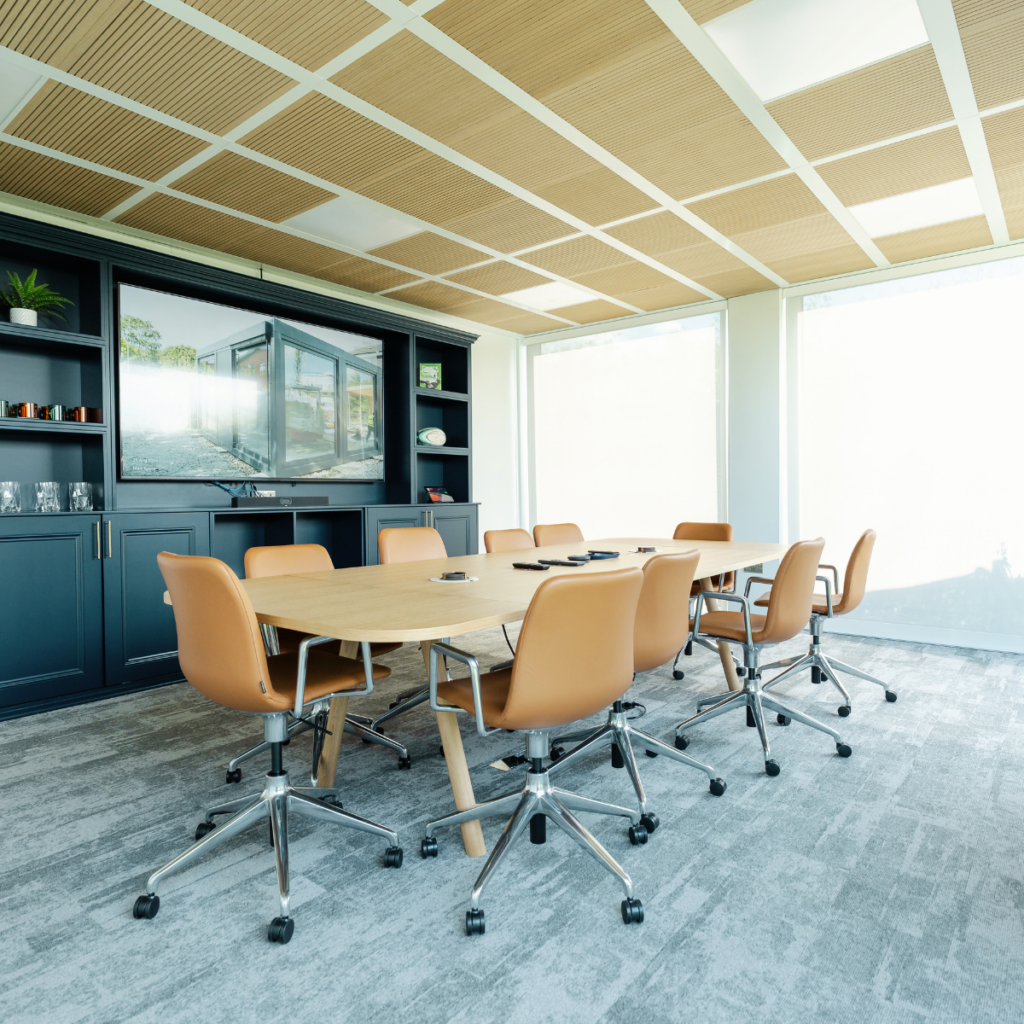
An effective office environment is one that reflects how the business operates. Every organisation has its own way of working, so office space should support daily activities rather than force teams to work around limitations in the layout.
A well-designed modular solution makes it possible to create environments that feel natural to use, helping workers navigate through the workspace efficiently while maintaining organisation across the business. If requirements were to shift, spaces can be adapted without the disruption that occurs in conventional office environments.
The importance of workplace design is increasingly recognised by organisations themselves. Research has found that 82% of businesses operating fully from the office believe their workplace strategy has improved employee productivity, highlighting the value of creating environments that actively support the people using them.
At Maxi Space, we thrive in creating flexible office space that is comfortable and capable of supporting long-term business objectives. The ability to be adaptable over time proves that the workspace will remain just as effective in the future.
A recent project for St Joseph demonstrates the value of this approach in practice. The requirement was for a workspace capable of supporting a long-term infrastructure project spanning 25 years, bringing office space, meeting rooms, welfare facilities, and specialist rooms together within a single building.
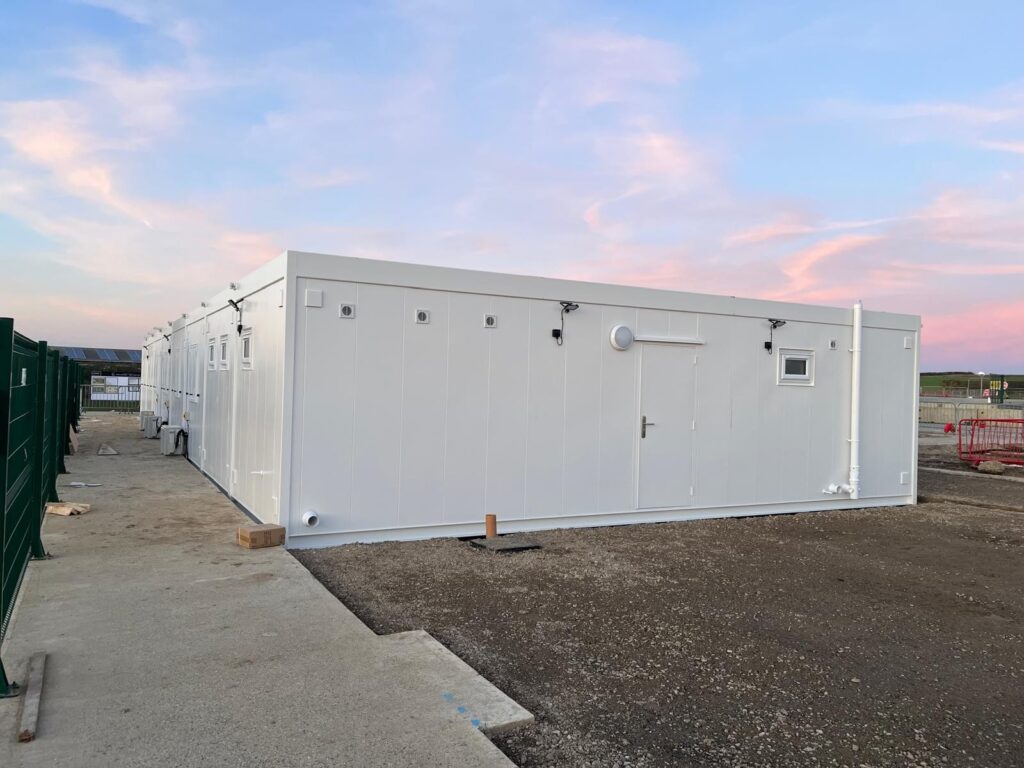
To meet these requirements, we delivered an eight-bay modular solution designed around a clear and practical layout. Office areas, an open-plan workspace, meeting rooms, and a boardroom provided space for daily operations, while welfare facilities supported employees throughout the working day. Glazed partitions were also incorporated where required, complete with compliant manifestation to maintain both safety and visibility.
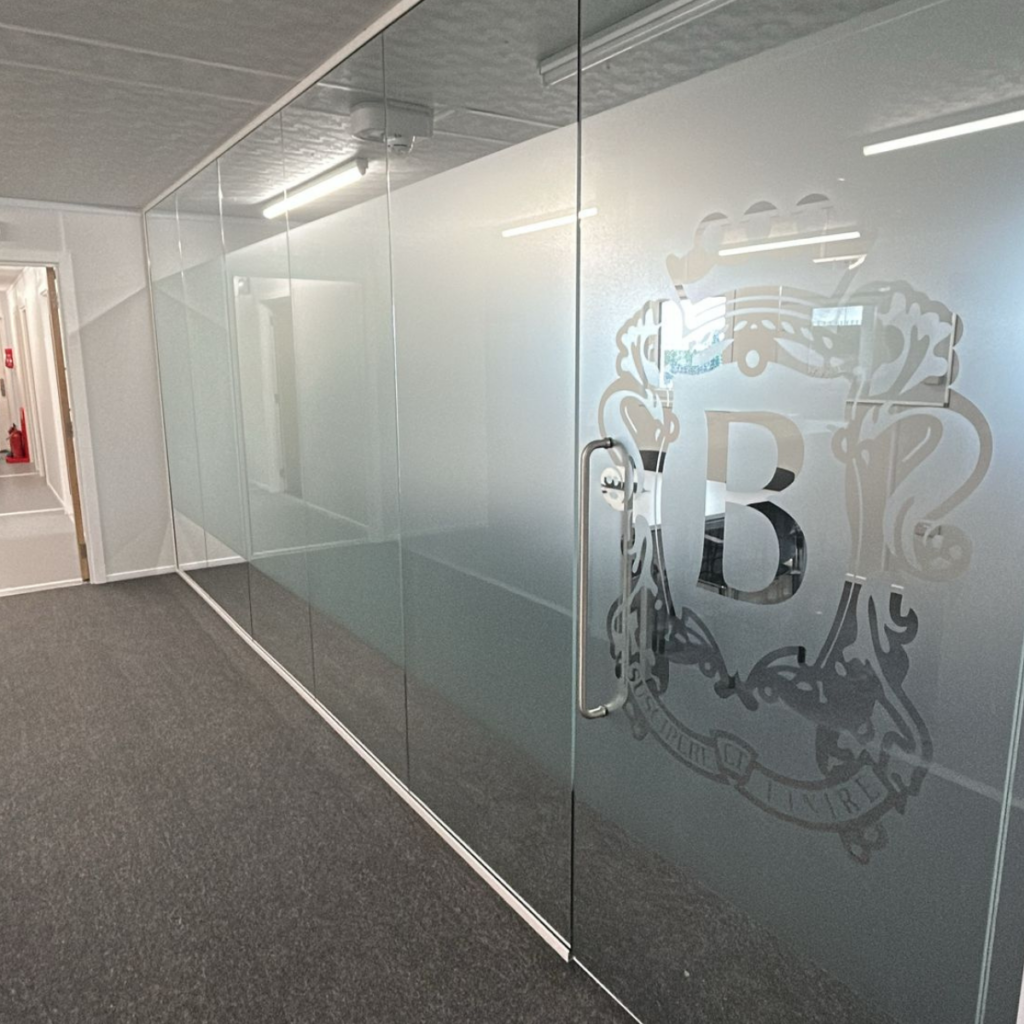
The building was delivered as a coordinated installation, with electrical, plumbing, heating, air conditioning, and lighting systems integrated from the outset. Durable internal finishes and a carefully planned layout ensured the space was ready for immediate occupation and capable of supporting long-term operational requirements.
The Long-Term Value of a Modular Office Building
While speed and flexibility are huge benefits of modular construction, its long-term value is equally important.
As companies grow and evolve, office spaces must stay relevant and functional. A modular design enables businesses to modify their work environment gradually, accommodating evolving operational needs without major rebuilding or moving.
A carefully planned modular solution makes a significant difference here, as instead of creating a workspace solely for current needs, it gives the chance to invest in an environment that has the ability to support future growth.
A modular office building is designed to support changing requirements, and with a 20-year lifespan guarantee on our modular units, the focus is on creating a workspace that remains functional and capable of supporting long-term business objectives.
Conclusion
The expectations for office environments always change, making adaptability an important factor to consider.
Through flexible office space, organisations are able to create workspaces that support productivity and provide teams with an environment that works around the way they operate. Teams can benefit from modular solutions due to the efficiency and adaptability that it comes with.
Ultimately, a modular office building provides a professional workspace that’s designed to support daily and future needs.
Sources
Pop-Badiu, L. (2024). WeWork Survey Reveals 72% of Companies Set to Expand Offices. CoworkingCafe. Available at:
https://www.coworkingcafe.com/blog/wework-survey-reveals-72-of-companies-set-to-expand-offices/
Sketch Studios (2018). The Impact of Workplace Design on Productivity. Available at:
https://www.sketchstudios.co.uk/blog/the-impact-of-workplace-design-on-productivity/