
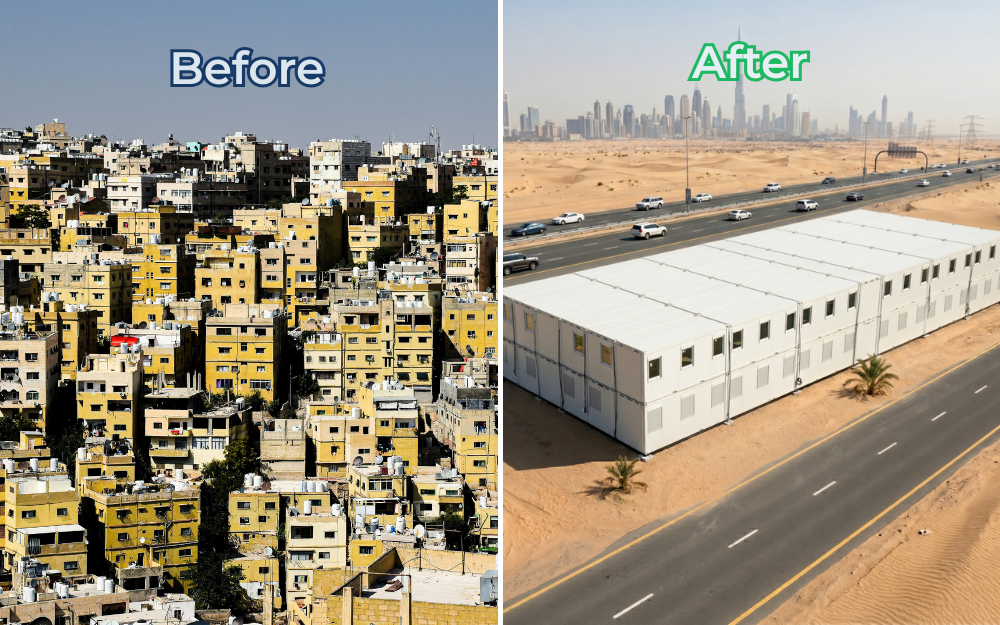
On many construction projects across the Middle East, worker accommodation is installed early and expected to perform reliably for the duration of the build. For a long time, these buildings were selected primarily on speed and cost, with the assumption that they were temporary and easily replaced.
That approach is now being reconsidered. In the UAE, stricter regulations, challenging climate conditions, and greater attention to safety and worker welfare are raising expectations around how accommodation should perform.
As a result, the market is shifting toward higher‑quality modular accommodation designed to deliver durability, safety, and consistent performance over time.
Utilising our established modular system, Maxi Space delivers European-engineered units that are made to perform reliably in the demanding conditions of the Middle Eastern climate, built to last and designed as a long-term, buy-once solution rather than a temporary fix. Our accommodation can be relocated and reconfigured as project requirements evolve, allowing it to be reused across multiple projects.
This reflects a broader move to raise standards as modular construction becomes a permanent and essential part of modern development across the region.
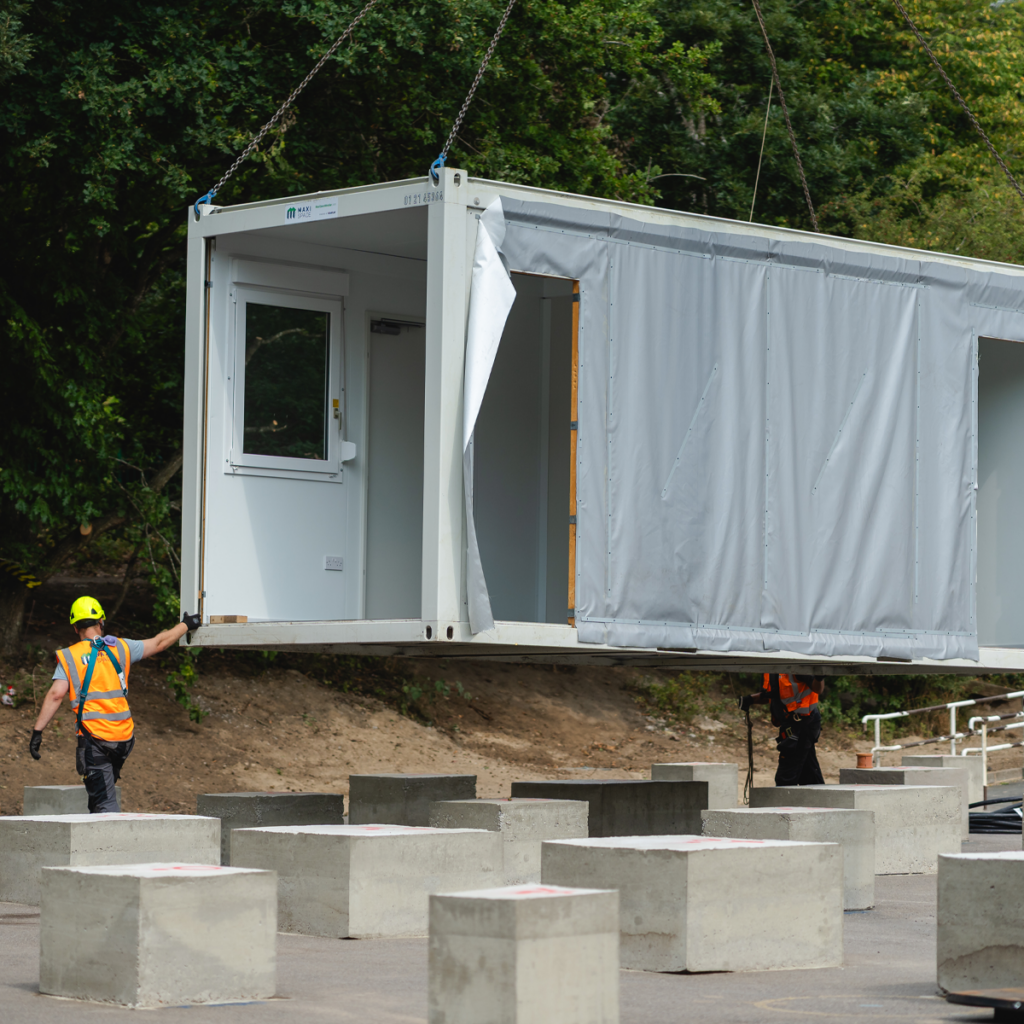
How the UAE is Quickly Transitioning to High‑Quality Modular Construction
The modular construction market in the Middle East and Africa hit USD 5.98 billion in 2024, with the UAE at the forefront. This indicates that modular building has become a mainstream method, no longer just experimental. Meanwhile, the UAE’s broader construction industry is growing swiftly, with an annual increase of 6.2%. This expansion is accompanied by higher client expectations for faster delivery, safer occupancy, and improved quality, all of which modular construction delivers more effectively than traditional methods.
This shift is also supported by the UAE’s drive toward more modern and efficient construction methods. The country is increasingly adopting digital planning tools, precision-based factory manufacturing, and real-time monitoring systems to improve accuracy, reduce waste, and avoid delays. High-quality modular construction naturally aligns with these technologies, making it a strong fit for the UAE’s long-term vision for smarter, more efficient, and more reliable building practices.
Dubai’s regulatory environment further reinforces the region’s confidence in modular construction. With Dubai Municipality now approving modular buildings up to G+20, it is clear that the government trusts engineered modular systems to meet high standards of safety, durability, and long-term performance. As the UAE continues to adopt modular solutions, it highlights the strength of systems like Maxi Space’s three-storey buildings, which come with a 20-year guarantee on the structural frame and can be reconfigured or relocated as project needs change. This shows that well-designed modular buildings are not only fully compliant but are quickly becoming the preferred choice for modern development.
This level of trust from government authorities sets a clear expectation for quality. As the region embraces engineered, high-performance modular buildings, it naturally draws attention to the risks of choosing cheaper, lower-grade alternatives that cannot meet the same standards. In a market moving quickly toward safer, stronger, and more efficient modular accommodation, choosing high-quality modular is no longer just a recommendation; it is becoming the expectation.
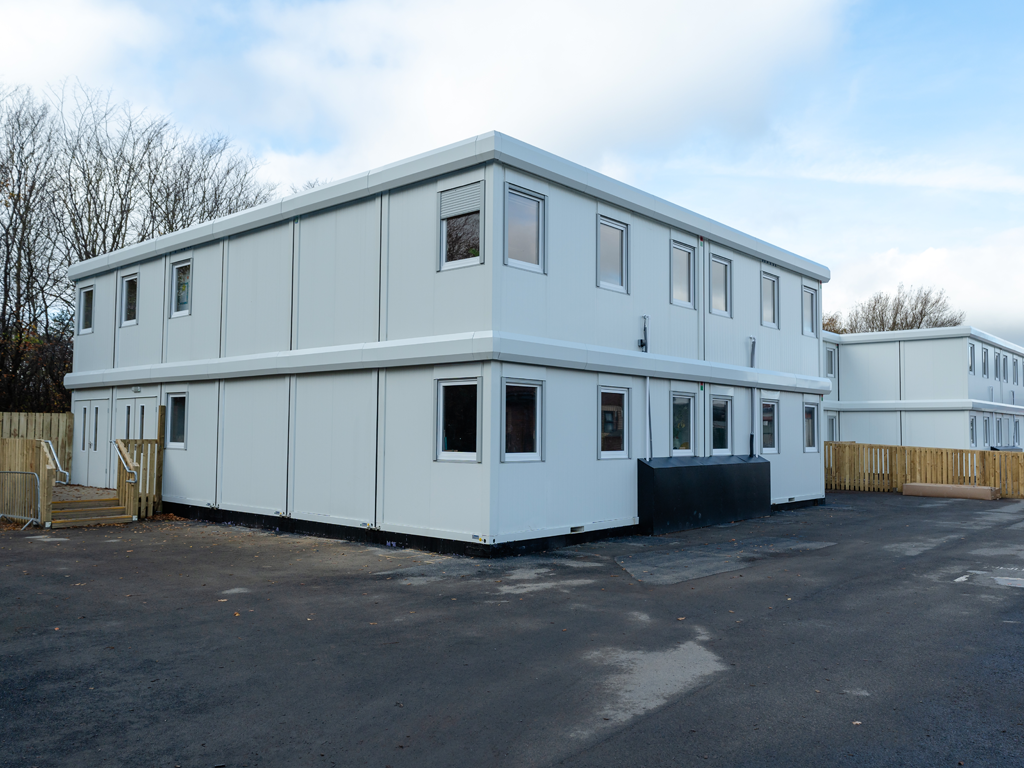
A Higher Standard of Fire Safety for Worker and Staff Accommodation
Fire safety is one of the most crucial factors in worker and staff accommodation, especially within the UAE and the wider Gulf region, where camps must comply with strict Civil Defence and municipal fire protection standards. Accommodation blocks housing over 300 people are treated as high‑occupancy facilities, meaning fire prevention and containment are enforced at a higher level than standard buildings. In the UAE, Civil Defence takes this seriously. Worker accommodation must be built with fire‑resistant materials, clear escape routes, proper alarms, and regular inspections. If a camp does not meet these standards, authorities can issue fines or even shut the site down.
High‑quality modular buildings provided by Maxi Space are designed to meet these expectations. Many lower‑cost units only achieve around 30 minutes of fire resistance because of thinner panels and lighter materials. Maxi Space can provide up to 60 minutes of certified fire protection, giving the building more time to hold its structure in a fire and allowing people to evacuate safely. This added protection is especially important in busy accommodation blocks and aligns with what Civil Defence looks for in terms of fire‑resistant construction and slowing fire spread.
Electrical faults are one of the most common causes of fires in labour accommodation across the Middle East. Cheaper modular alternatives often rely on basic wiring and electrical components that struggle in extreme heat, increasing the chance of failures and overheating. We use certified electrical systems designed for the region’s climate, meaning they are less likely to overload and remain safer over the long term. This supports Civil Defence expectations for reliable, properly installed electrics that work alongside alarms and detection systems.
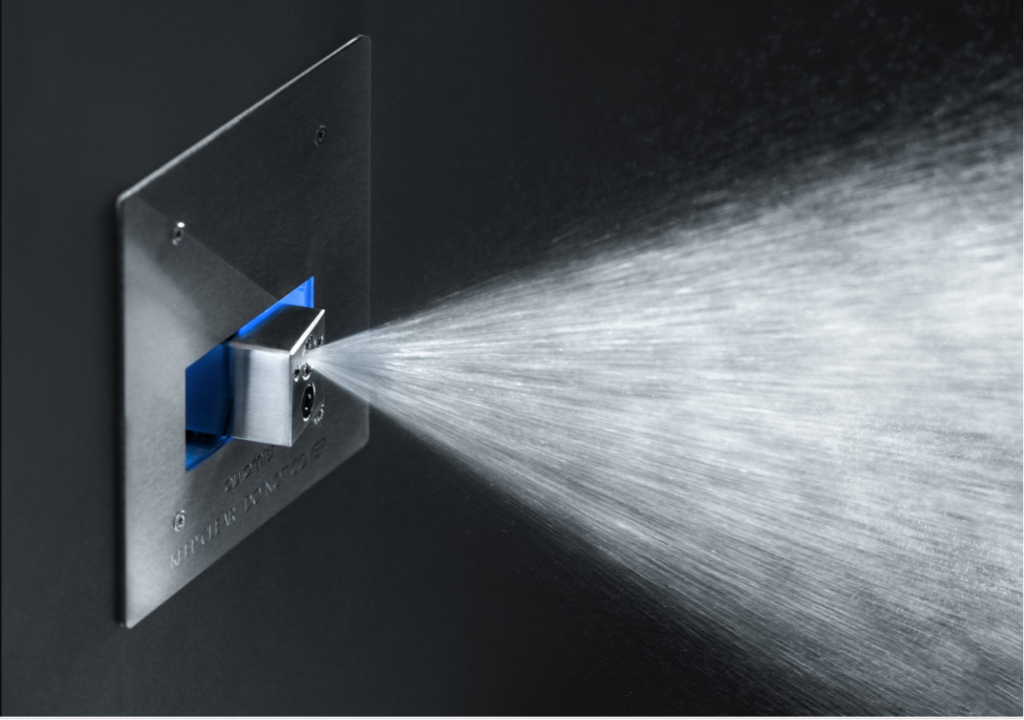
A misting system can add an extra level of protection by controlling a fire at an exceedingly early stage. Automist‑style designs use wall‑mounted spray heads that activate when heat or smoke is detected, releasing a fine mist to cool the fire and slow smoke movement. Early suppression like this can significantly limit how far a fire spreads and reduce the overall impact on the building, making evacuation safer. In worker accommodation, where rooms are close together, and fires can spread quickly, a misting system works alongside our construction, designed to slow the spread of fire, and reliable electrical systems that help keep conditions more manageable in an emergency.
Ultimately, our modular buildings use stronger materials that help the structure maintain integrity under heat, something low‑grade prefabricated units often struggle with. Cheaper solutions may weaken or collapse earlier during a fire, whereas reinforced modular construction provides a more stable environment for evacuation and emergency response.
Engineered for the Demands of the Middle Eastern Climate
The Middle Eastern climate exerts significant stress on buildings. Summer temperatures often surpass 45°C, risking overheating, heat stress, and AC failures if buildings lack proper insulation or cooling. Cheaper modular options tend to use thin, poorly insulating panels, allowing heat to enter easily. This causes AC units to run continuously, increasing electricity use and stressing electrical systems, which can lead to burnout and uncomfortable indoor conditions.
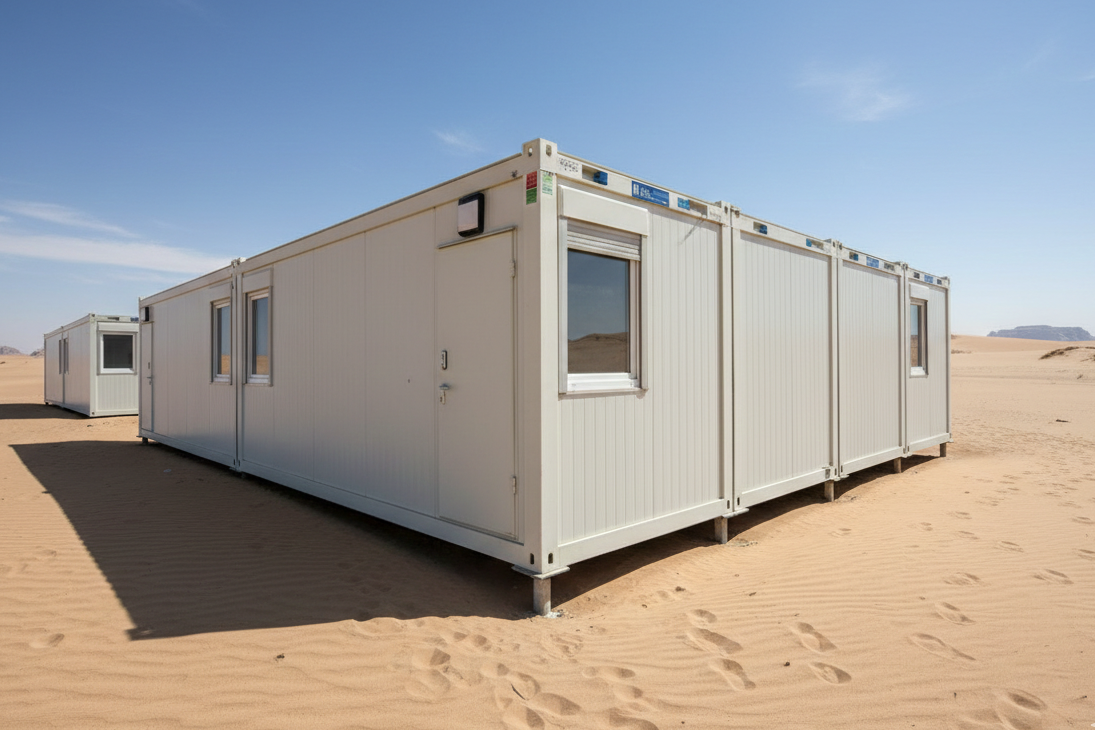
In the UAE, cooling accounts for up to 80% of a building’s electricity consumption, and as temperatures rise, demand will grow. Poor insulation worsens this issue, while high-quality, well-sealed modular buildings reduce cooling loads and lower long-term energy costs. Our premium solutions offer better thermal performance, keeping buildings cooler longer, using less energy, and easing strain on AC systems.
Humidity also plays a crucial role; often exceeding 60%, it promotes corrosion, especially in cheaper buildings with untreated, weaker materials, leading to rusting and structural deterioration sooner than expected. Our modular solutions are designed to withstand these harsh conditions and ensure long-term reliability. They use materials and construction methods suited to the UAE’s extreme climate, providing a more stable interior environment, better corrosion protection, and reduced stress on cooling systems.
The result is a building that endures extreme heat and humidity while remaining comfortable for occupants.
Designed for Heavy-Duty Use and Long-Term Structural Stability
Mass-produced imported units are typically designed for short‑term or light‑duty use of around 1 to 2 years. They are not intended to withstand repeated relocation, stacking, or long‑term intensive use. In real‑world conditions, especially in harsh climates or busy accommodation settings, these units tend to deteriorate much earlier than expected.
Expertly engineered modular buildings are built to a different standard. As they must withstand lifting, transport, and reuse, they require a higher structural tolerance. We offer a solution that can be safely stacked up to three storeys, proving its strong structural performance.
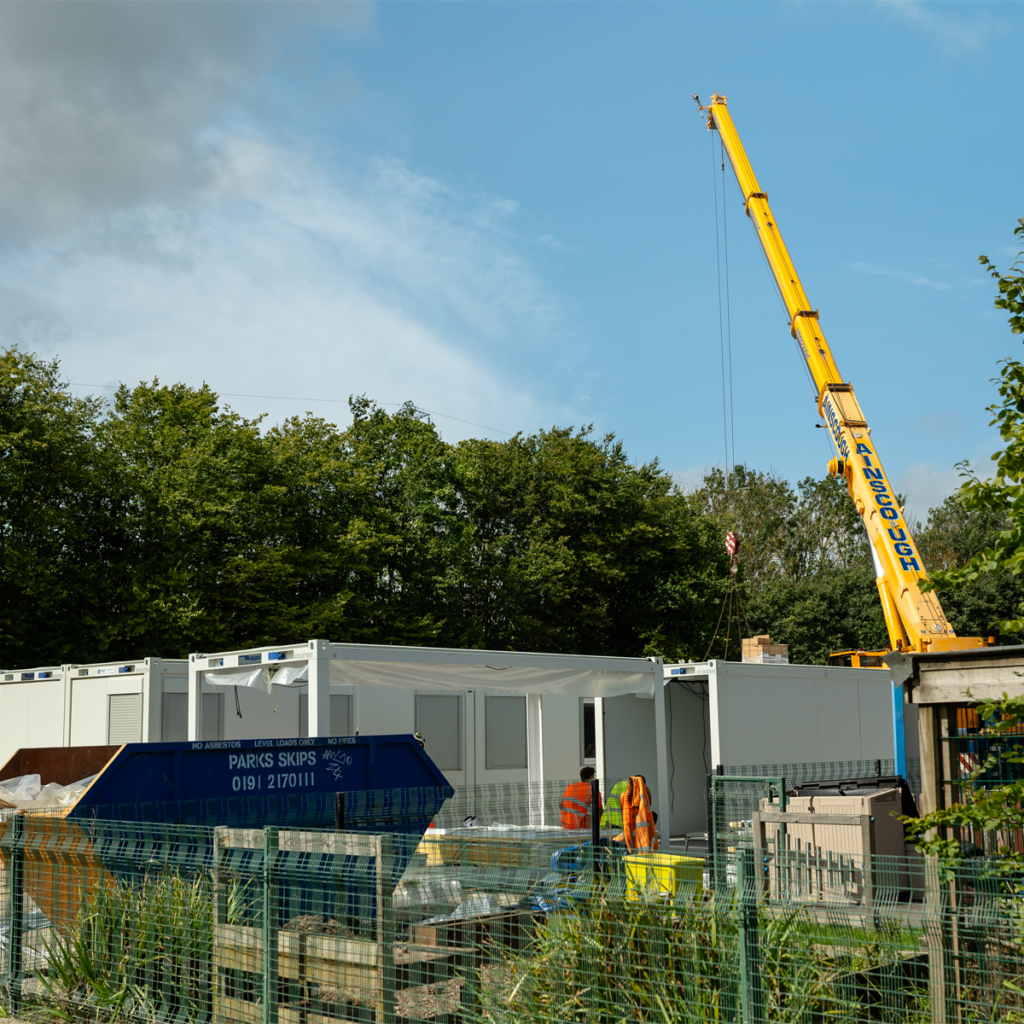
The build quality is reflected in the 20-year guaranteed lifespan, representing a minimal level of performance under real-world conditions. The guarantee is designed to account for repeated use, relocation, and daily wear, giving confidence that the buildings will continue to perform safely and reliably over time.
Worker Welfare That Supports Safety, Comfort, and Productivity
Thermal comfort is critical in the Middle East, where temperatures regularly climb above 45°C and humidity often exceeds 60%. In the UAE, a staggering 86% of outdoor workers report symptoms of heat exhaustion. Heat stress also decreases concentration, increases accidents, and erodes overall productivity.
At Maxi Space, we dramatically improve conditions by providing factory-built accommodation that arrives fully assembled. This drastically cuts down on onsite work in the sun, with reports showing that a single-family prefabricated home, on average, reduces on-site labour hours to 320 in total, compared to 890 hours for a traditional build. As a result, heat exposure is greatly reduced, and there are fewer delays caused by extreme climate conditions.
With thermal comfort, reliable cooling, and reduced on-site work, a living environment is created from our premium modular solutions that protect workers’ health, support regulatory requirements such as the UAE’s midday heat ban, and enhances recovery after long workdays.
Long-Term Value Through Better Time and Cost Efficiency
When higher‑quality modular accommodation is viewed over its full lifecycle, the value becomes clearer:
- Faster, more predictable installation reduces delays
- Limits prolonged work on site in extreme conditions
- Better insulation reduces running costs
- Stronger construction reduces ongoing maintenance
- More reliable systems avoid the frequent repairs often seen with cheaper alternatives
Over time, maintenance demands, energy use, and early replacement are where lower‑cost modular solutions tend to become more expensive than expected. By contrast, our modular buildings, designed for long‑term use, function more like assets than disposable units, offering greater cost certainty and fewer operational issues across multiple projects.
Offshore Oil Concept: Maximising Space Through Modular
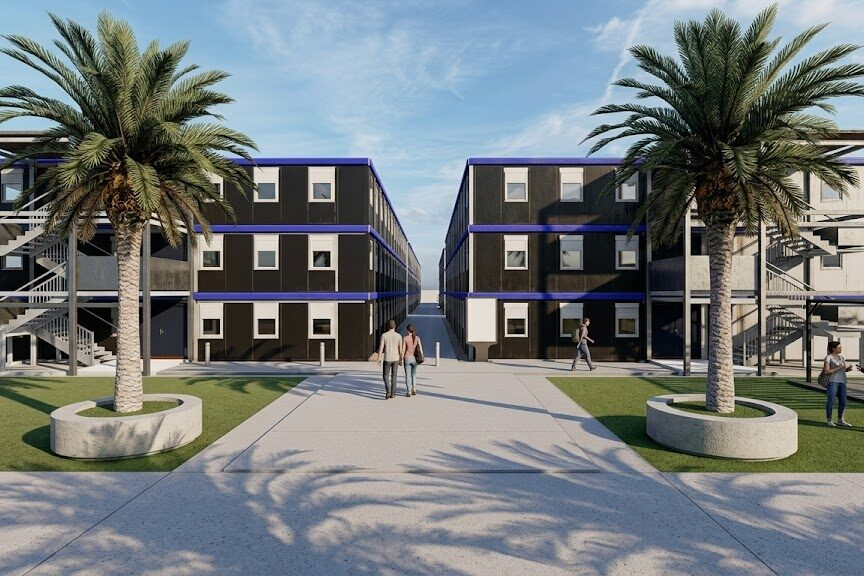
Our concept case study on Offshore Oil explored how worker accommodation could be delivered on a man-made offshore island, where space is highly constrained.
Rather than relying on low-rise buildings that spread across a larger footprint, we proposed a three-storey modular arrangement. By stacking accommodation vertically, the overall land take would be significantly reduced, ultimately freeing up space for essential facilities while keeping the site practical to operate.
This also has a direct impact on overall project cost, as a smaller island footprint reduces the extent of groundworks, infrastructure, and associated construction requirements.
As the solution is modular and factory-built, the units can be transported, installed, and then relocated or reconfigured as requirements change, proving long-term flexibility beyond a single project.
Conclusion
The UAE is raising expectations for worker and staff accommodation, driven by stricter regulations, extreme climate conditions, and a growing focus on safety and welfare. Modular construction has become the preferred approach, but quality now matters most.
Across fire safety, climate performance, structural strength, worker wellbeing, and long‑term value, higher‑quality modular solutions clearly outperform cheaper alternatives.
We reflect this shift, offering accommodation that is designed to perform reliably in real‑world conditions and align with the standards the region now expects.
In a market where standards are rising, high‑quality modular is the practical way forward.
Sources
- CBNME UAE Advances Policy Framework to Accelerate Adoption of Modern Construction Methods. Available at:
https://www.cbnme.com/expert-insight/uae-advances-policy-framework-to-accelerate-adoption-of-modern-construction-methods/ - Emirates Fire Safety: What Are the Fire Safety Requirements for Buildings in the UAE? Available at:
https://emiratesfire.ae/press-center/what-are-the-fire-safety-requirements-for-buildings-in-the-uae/ - Fire Protection Association: When Are Fire Sprinklers Required in Commercial and Residential Buildings? Available at:
https://www.thefpa.co.uk/advice-and-guidance/advice-and-guidance-articles/when-are-fire-sprinklers-required-in-commercial-and-residential-buildings - Construction Week Online UAE Weather and Construction Safety. Available at:
https://www.constructionweekonline.com/news/uae-weather-construction-safety - Corporate OHS Heat Stress Management in the UAE: Ensuring Worker Safety. Available at:
https://corporateohs.com/heat-stress-management-in-the-uae-ensuring-worker-safety/ - QG Building How Do Prefab Homes Save Construction Time? Available at:
https://www.qgbuilding.com/blog/how-do-prefab-homes-save-construction-time - Gulf News UAE Enforces Midday Work Ban to Protect Workers from Extreme Summer Heat. Available at:
https://gulfnews.com/uae/government/uae-enforces-midday-work-ban-to-protect-workers-from-extreme-summer-heat-1.500158147 - Offshore Oil Maxi Space Concept. Available at:
https://maxispace.com/projects/offshore-oil-concept/