
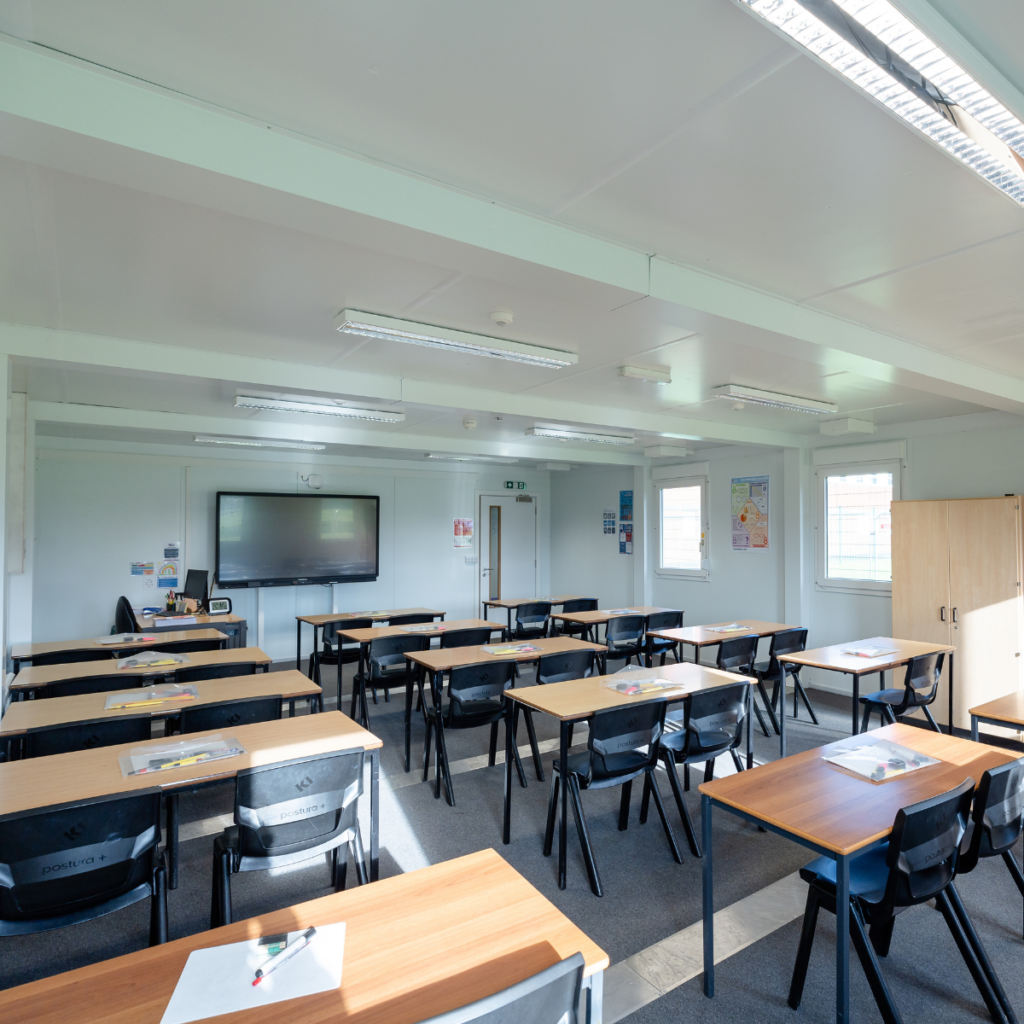
Planning a modular classroom involves many decisions, and flooring matters more than it may seem, affecting how quickly the room is ready and how much maintenance it requires over time. Ahead of Education Estates, we’ll set out the flooring options we offer and the differences between them, so you can decide early rather than make a rushed choice once the build is underway.
Why Flooring Choice Matters More in a Classroom
Classroom floors experience more sustained daily use than most other spaces in a school building. For temporary classrooms that are brought in to solve a real problem, flooring must still perform to the same standard as one in a permanent building, right from the start. That makes the choice of flooring an important consideration when specifying a modular classroom, particularly where the space is expected to accommodate high levels of daily activity with minimal maintenance or disruption.
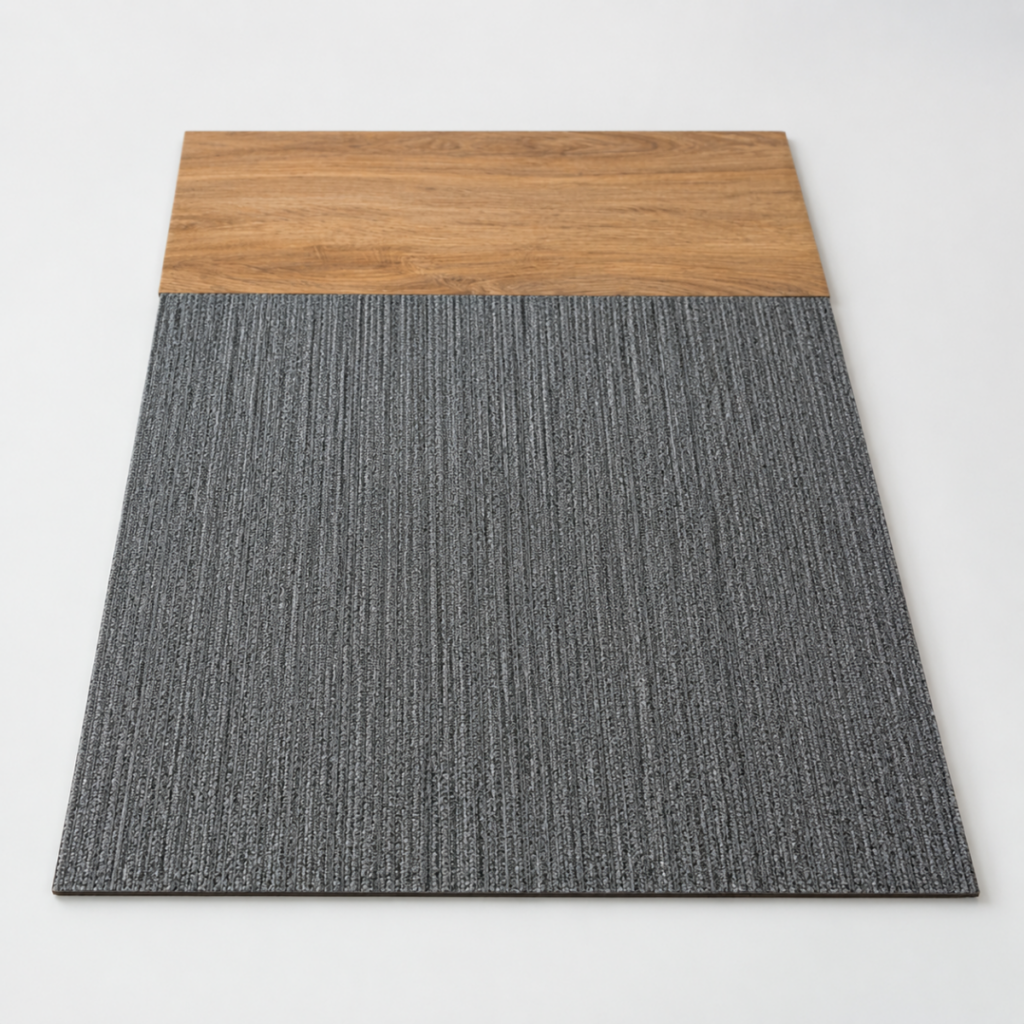
Magnetic Flooring
The first approach uses a magnetic-backed panel system. A base layer is fitted first, and the floor panels lock onto it magnetically instead of being glued down. That means the floor can go down without waiting for adhesive to cure, and it can be used almost immediately. Individual panels can also be replaced on their own if one gets damaged, instead of having to redo an entire area. The system also holds up well acoustically, which matters in a school where noise between rooms is something to manage carefully. As nothing is bonded to the subfloor, panels can be lifted cleanly and reused elsewhere if a modular classroom is reconfigured or moved, which fits how the buildings can be used.
Adhesive Flooring
The other option is a standard adhesive-fixed floor, glued directly to a prepared subfloor. It is a well-known, widely available approach that is used in many buildings. Subfloor preparation is carried out first, followed by the adhesive itself. Once installed, the floor is fixed in place for the long term, which suits temporary classrooms that are unlikely to be relocated after installation. It is a proven and durable option.
Which Makes Sense for Your Classroom
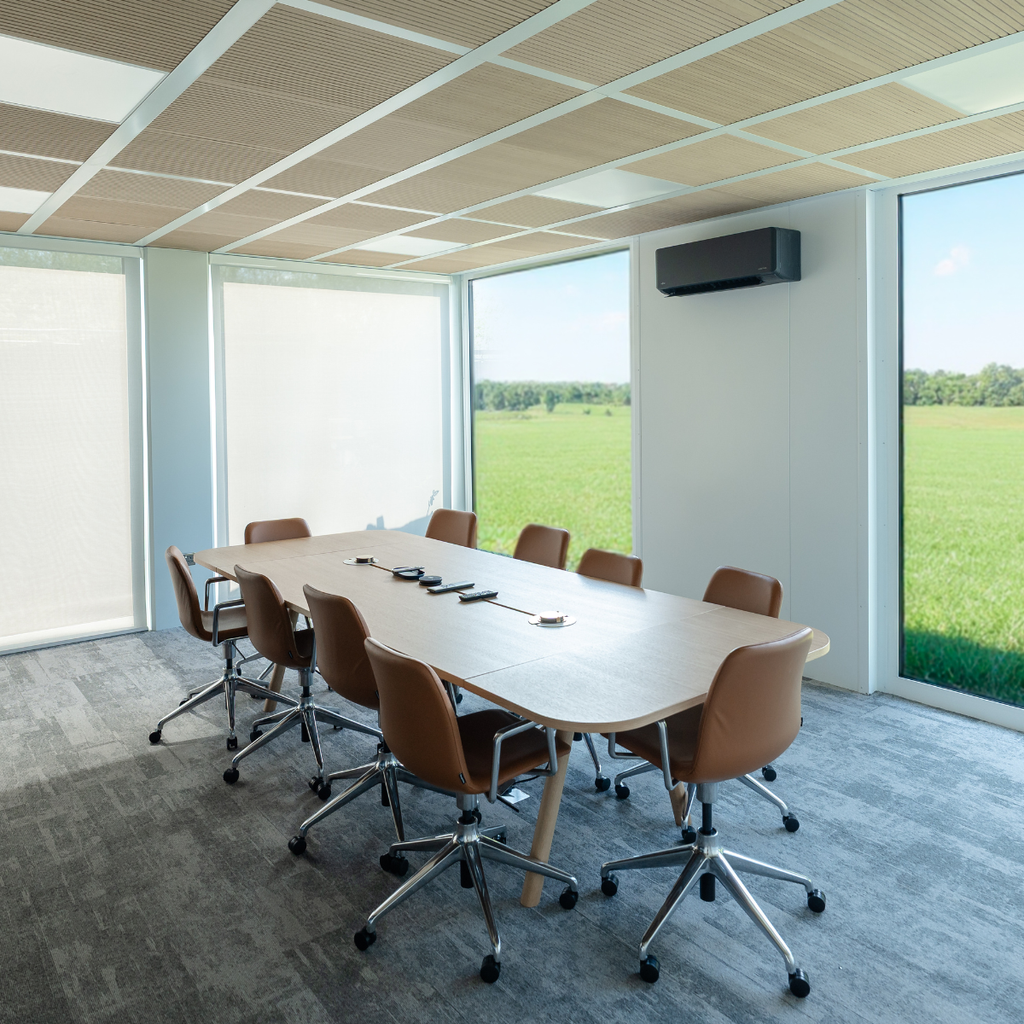
Either option suits a modular classroom well, despite the intended use of the space. Magnetic flooring offers speed and easy repairs, adhesive flooring offers a familiar, well-tested standard, and both handle daily classroom life well. Ultimately, the main difference between the two is timing. Magnetic flooring can be used as soon as it’s fitted, while adhesive flooring may need time to cure before it becomes ready for use. If you’re working to an extremely tight schedule on a temporary classroom, then this is worth considering early on in the project. Other than timing, it simply comes down to preference.
Talk to Us Ahead of Education Estates
We’ll be discussing flooring for a modular classroom at Education Estates this year on October 20-21. Flooring is important and is something that should be raised early on, as it’s easier to decide on at the design stage than to change once a modular building is already on site. See more about how we approach education projects, or arrange to talk to us directly at the event.