
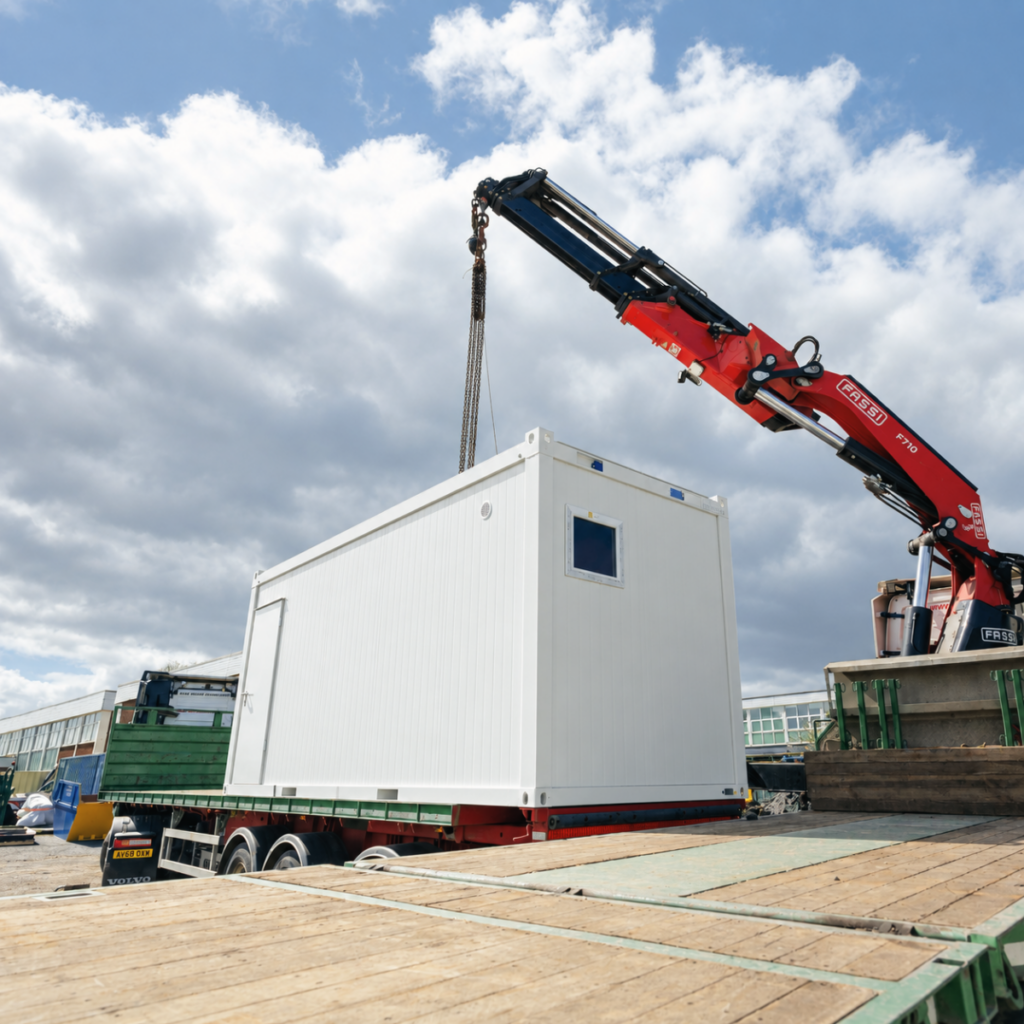
Schools are under constant pressure when it comes to space, and it’s rarely as simple as just needing more of it. The government’s own figures show the scale of this. The latest school renewal plan sets aside £1 billion to fix buildings that are no longer fit for purpose, alongside a separate £700 million programme to catch problems before they become a crisis. Rapid deployment modular classrooms are built to answer exactly that kind of pressure.
Waiting Until They’ve Run Out of Space
Space pressure often builds quietly before it can become obvious. Most gradual problems are ones that schools don’t notice. What happens next? They notice the issue once pupil numbers rise and there’s nowhere to put a class. Waiting for that moment to act is usually the first mistake. Rapid deployment changes what’s actually possible here. A modular classroom can go from decision to occupied room in a matter of weeks rather than the years a traditional extension usually takes, so the fix doesn’t lag behind.
Assuming a Temporary Classroom Has to Feel Temporary
The second mistake is assuming speed comes at the cost of how a room really feels to be in, and that assumption doesn’t hold anymore. Our innovation work gives a modular classroom real design flexibility, including brick slip and cladding options that let the finish be matched to a school’s existing buildings, so a new classroom can be designed to sit alongside what’s already there. A separate piece on flooring choices shows the different options available, as this will also affect how a room fits its surroundings. It reinforces the importance of a bespoke modular solution and how it affects the way that a classroom feels when it is in use.
Focusing Purely on How Many Classrooms are Needed
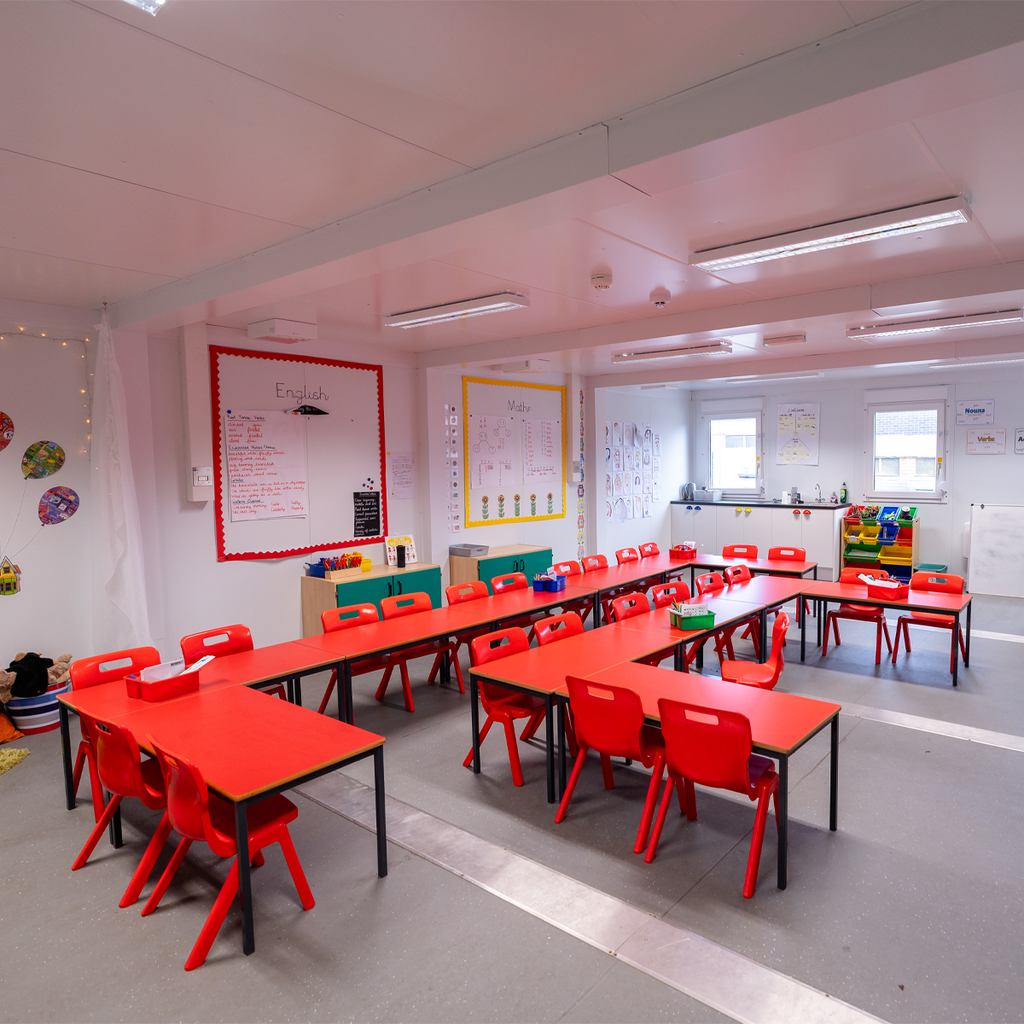
Furthermore, another mistake is planning only around a number rather than what the rooms need to be. The government has committed more than £3.7 billion to create 60,000 new specialist SEND places between now and 2030. That’s not actually just a demand for more teaching space; it’s a demand for a different mix of space entirely, such as SEND provision, small group rooms, offices and other specialist areas, depending on what’s actually required. Our modular solutions are always designed around that mix directly, built to the exact bespoke requirement instead of a single repeated template.
A modular classroom that is planned around the right mix of space is what gets this right. When EdAct, a multi-academy trust operating across five sites in North London, required a space that could work both as a classroom and a therapy room for students with special educational needs, that is exactly the kind of brief that a single, repeated template cannot answer. So, we designed a single-storey building with one large, open-plan room suited to both teaching and therapy, along with an integrated restroom with shower facilities, and had it fully operational within four weeks of the groundworks being completed.
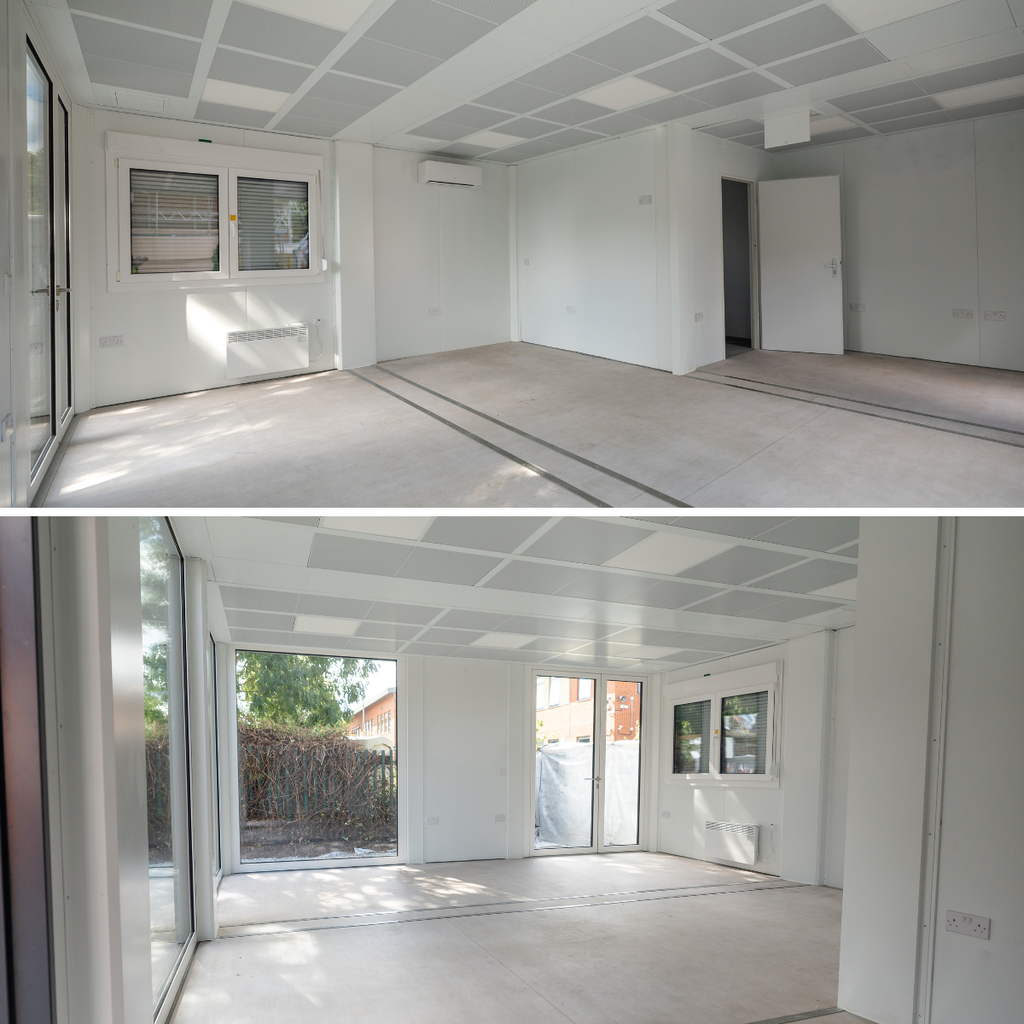
See the full project details here.
Underestimating the Disruption Construction Causes
Another mistake is planning the build programme without accounting for what happens to the school while that work takes place. With modular classrooms, most of the build happens off-site in factory-controlled conditions, so it’s only the groundworks that take place on the school grounds, and these can work in parallel with each other. Work can also commence outside of school hours, which is effective as preparations for the modular solution can take place while children also continue to learn, provided that all buildings are safe to use. The government’s own approach reflects this. Its Renewal and Retrofit Programme is focused on addressing problems before they become costly crises, which is also the principle behind carrying out as much of the construction process as possible away from an active school site.
Assuming Permanent Construction Is the Only Option
Finally, treating extra space as either committing to a large permanent building project or not expanding at all is a mistake. A modular classroom can provide the space a school needs without any permanent construction taking place at all. It can be used as an interim solution while a longer-term project commences, but the permanent option is always available. Our modular solutions can always be lifted, relocated, or hired rather than bought outright. Therefore, the choice can change as a school’s needs do, rather than being fixed the moment it’s made.